Blog

  • Don’t blame the trigger

    Don’t blame the trigger

    On this course on a relational mediation framework called Insight Dialogue, we have spoken about right speech inner and outer, and about Papancha. In this post, I want to deal more practically with what to do with that pesky inner narrative as we start to become more aware of it in the pause of this practice. In reading and listening to some of my students’ posts this week, I was struck by how much we carry the weight of mental formations precisely during the times when we choose to act in a way that fulfils our commitment to right speech (that which leads to long term wellbeing for oneself and others):

    The Buddha was precise in his description of Right Speech. He defined it as abstinence from false speech, abstinence from malicious speech, abstinence from harsh speech, and abstinence from idle chatter. In the vernacular this means not lying, not using speech in ways that create discord among people, not using swear words or a cynical, hostile or raised tone of voice, and not engaging in gossip. Beth Roth

    When something happens in the outer world, we remember our vow to practice right speech. We note a hindrance such as ill-will arising, and we choose to say nothing in that moment so as not to add ill-will to a situation. Triggers abound in the world, and we note them that much more when we have made a vow to abstain from false speech. What my students have been commenting on this week is the extent to which inner right speech feels that much more challenging. We carry the situations that trigger us for days, we notice the 5 hindrances take hold and their effect on the texture of the Citta. Yet, we often find ourselves unable to put the burden down.
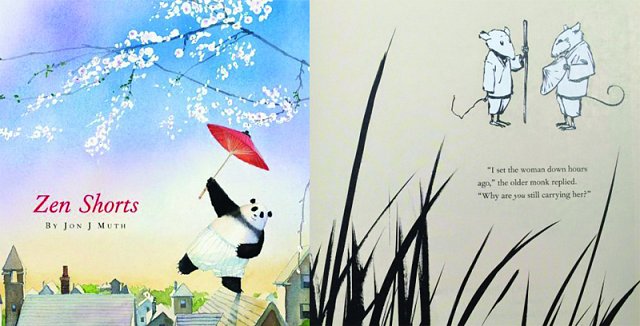
    Read full story here

    So I spent this week looking to my own teachers to find some ideas to support my students in this practice, when I refer to ‘practice’ in what follows I mean Buddhist Meditation practice, which includes the practice of right speech and Insight Dialogue. I know how challenging it can be to sit with our thoughts when we identify them as me/mine. Triggers ‘out-there’, say something about the self we built ‘in-here’ and the more we feel out-there is the cause, the less likely we are to be able to put the burden down.

    They might be shooting at us. What is it? It doesn’t matter. It’s that inner peacefulness that makes all the difference. It’s that inner experience that we live in. We don’t live in those outer experiences; they’re just triggers. One of the formulas that’s important to have and to remember, and maybe hang over your bed or somewhere you can see it is: Don’t Blame the Trigger. Out there, they’re all triggers. What this cultivation of metta means is that within us we have acquired a peaceful zone. We have acquired a zone without pollution. We have acquired a feeling of safety and security, which will be with us no matter what happens. But that’s the result; the work toward that goes on day after day, moment after moment. Ayya Khemma

    Working towards ‘the inner zone without pollution’  Ayya Khemma describes is tough, and can take more or less time depending how deep our insight is; insight in the sense of seeing life as is through the 3 characteristics of existence – anicca, dukkha, anatta – not in the sense of personal insight. Buddhism generally, and Theravada as the foundation of Insight Dialogue in particular, emphasises what psychologists call self-transcendence values, such as benevolence and universalism (Swartz, 1992). This matters here because, according to Theravada Buddhism, to be able to put the burden of false speech down, we also need to work on insight in the non-personal sense; this means an aspiration to turn the sense of an abiding self into a fluid impermanent collection of elements of existence. When right speech is taken outside this context, the noble 8-fold path, it can overwhelm us. This is the distinction between personal and spiritual development, the personal aims to develop a self adapted to the society it operates in, the spiritual aims to transcend it.
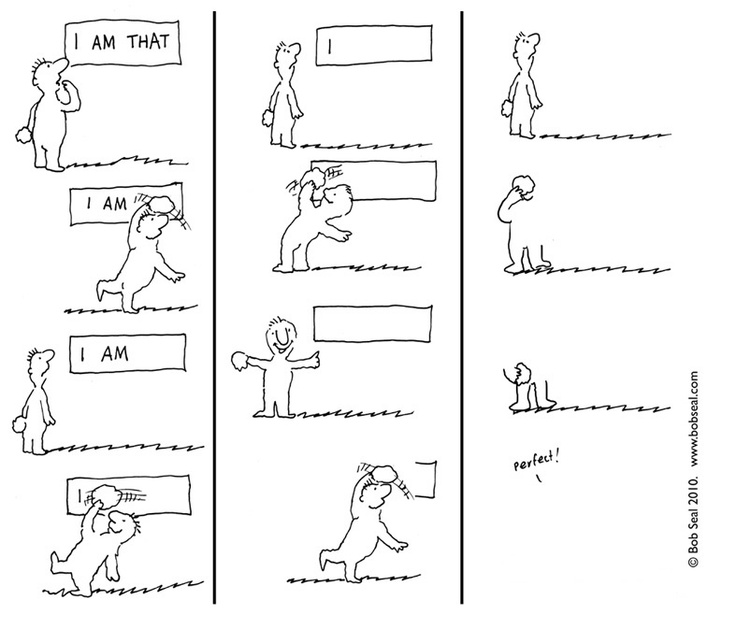
    Right Speech requires more than mindfulness and is fundamental to the practice of relational meditation as developed in Insight Dialogue.  John Peacock challenges some of our mainstream understanding of mindfulness as non-judgemental awareness, he reminds us that ‘not everything is changed just by looking at it, sometimes you have to do things’. A vow to practice right speech in the world is us ‘doing things’ to evolve. He highlights that the Buddhist path is one where we commit to ‘deliberately and mindfully forming concepts, inclining our mind’ to particular concepts and away from others. Peacock quotes the Buddha to sum up the commitment we are making: The way you incline your mind will become the shape of your life.

    And the question remains, how do I release the grasping of my opinions to find that space beyond the I-thought, what Bohm calls the tacit space beyond thought? Even if we are committed to practice, and have made a vow – or perhaps because – can somebody offer us something to guide us through the challenge of sitting with the pesky inner narrative that is so often the practice of false speech?

    For this I had to turn to my own teachers.

    With deep attention you put aside the assumptions and judgements and check it out and you do so repeatedly until you have reliable field notes on a psychological pattern. Maybe you challenge your preferences, phobias and addictions by undermining their imagery; imagining what the new and shiny will look like in five years time for example. Maybe you just need to ask, as the Buddha reportedly did:Is this mental pattern for my welfare, the welfare of others, and does it lead to liberation? Consciousness is then the experience of being with a sight, sound, thought, etc. So when there is the movement to attach to or grasp any aspect of consciousness, balance is lost, just as when a tightrope walker tries to grip the wire that they are walking on. Consciousness, the co-arising of object, knowing of it and subtle presence, is a process that has to be adjusted to. Which is a kind of effort. Yet, if I maintain that balance, if I incline towards resting in that relational sense, I do not feel bonded to sights, sounds and the rest. I feel less embedded in what is arising and able to respond, step back, engage or investigate. Ajahn Sucitto

    And there is also common wisdom that leads to the same end, if the complexity of Buddhism makes your head hurt:

    And it reminds me that the secret of wellbeing lies in things that we were taught as children, and at the time may have rebelled against, because they seemed to be all about the benefit of adults. Be grateful, say thank you, see the good in whatever comes to you, forgive people because you know, it is good for them. Be tolerant. But you thought: Why should I? Why should I forgive? And why should I be grateful? Life teaches us that these things are the secret of happiness and that they are done as much for our own good as for that of others. Yet the dichotomy is false, because in helping ourselves we help others, and in helping others we help ourselves. So I will just leave you with this thought: the sense of a sacred world, the sense of a world that calls forth feelings of tenderness and gratitude in us, is probably the true source of wellbeing that we walk past as we hurry onwards, on our way to death. Iain McGilchrist

    Finally, excerpted audio from one of my most beloved teachers, now dead, Ayya Khemma: Don’t blame the trigger!  Be warned she is quite uncompromising, the audio quite bad quality, and listening for meaning will require deep attention:

    She speaks for the place of spiritual insight I spoke about earlier, not from a place of the right or wrong of the world as we live it daily. I find helpful the idea that I can walk away from a trigger without blame and that this may enable to affect the situation more skilfully at another time. In these situations I sometimes find that a chant I learnt in my monastery helps me. It is called Reflections of Universal wellbeing (click on the link to listen to it) and it reminds me that

    When they act upon intention
    All beings are owners of their action
    And inherit its results.
    Their future is born from such action
    Companion to such action
    And its result will be their home.
    All actions with intention
    Be they skilful or harmful
    Of such acts, they will be the heirs.

    I hope that some of the resources I am sharing here will support further exploration of the practice of Insight Dialogue for my students and also enable them to take the practice of right speech further in their informal interactions in the world.

    My understanding of these teachings today; take what serves and ditch the rest.

  • Dear Students

    Dear Students

    I have just spent my last morning before spring break reading blog posts from you all. I wish the wisdom and engagement with learning could be ‘out here’ on the web for others to learn from rather than ‘in there’ jailed inside Blackboard.

    I have been touched by what you have written, I feel privileged to have been given a window into the many creative ways you have taken on challenging reading and found ways to turn them into life experiments that could enable you embed the teaching into your daily lives. Living life as inquiry is a challenging choice to make in learning, it would be so much easier to just quote page numbers and apply only logical thought to what you are all reading.

    Judy Marshall has written a whole book about living life as inquiry as a research method, a handbook for first person action inquiry. Her original definition of the process came vividly to mind on reading your wonderful words this morning, and bears quoting in full (and I hope close reading on your part),

    The original paper describes the process in such a way that it can enable us to embed within it any approach to action inquiry. I was struck by the diversity with which you tackled the ‘making sense’ of our content: one of you thinking of our authors as long lost grandparents, or picking out imagery the authors use in a short sentence and connecting to personal learning, or expressing honestly how challenging certain readings have been.

    Something that stood out for me as a theme was that you are understanding the importance of intentional cognitive friction to learning new things. The way in which challenge and discomfort can bring us new insight but also how tough it is to sit with feelings we label as negative.

    Another theme that jumped out at me, about the learning process, was how much of a prerequisite to learning intention is. You all worked with the Daily Stillness and, as it had been set as an assignment, you ‘took the prompt with you’ for the day. Some of the stories you told about the impact I found touching and one in particular made me stop and think: one of you had kept a prompt for 6 weeks, waiting for time to ‘do it’ and decided to use the video in the prompt as quiet time each morning through the week instead of working with new prompts. This made me reflect on how important it is for us to prioritise inquiry in life. The idea of taking time to watch a soothing video that could enhance my wellbeing, remains just an email in my inbox unless I prioritise taking action on this email above the many other things demanding my attention. In a sense, what matters most is to decide that it matters.

    Several of you spoke about ‘small activities’ making a big difference to the ongoing quality of your experience. One of you feeling finally ‘liberated from the cell phone’ after choosing to create a blank screen for it, so that they could relate to it intentionally: Am I acting from habit or do I want to check the phone? Again, this was a prompt that had been on the inbox for a while, but this week it was time for action. Liberation indeed, as you wrote on your post. I am always surprised at the big impact that a small thing can have, if we choose to commit to do it and turn it into an opportunity for personal inquiry. Of course, what this means is monitoring the results we get, but not judging those results. We note that we could or could not do it. We note that we can start again the next day or the next moment. We note, we let go and frame the next inquiry. This is what John Peacock defines as the epistemology of Buddhism: Orthopraxis.

    Another theme that stood out was the strong positive or negative reactions that this week’s Movie Week generated. Words like: ‘unhelpful and depressing’ applied to the same video that somebody else sees as ‘a lighthearted look at alienation, modern dystopian living, and the collapse of our species’; another video seen as ‘hectic and loud’ by one, and ‘fun and inspiring’ by somebody else. I thought this an example of how asynchronous communication can teach us, if we give meditated text a chance. We have been talking about how our proliferating views and opinions stop us from opening to experience and something as simple as reacting to a short animation can show us how “We see things not as they are, but as we are.” Unknown

    Or, more colloquially expressed by a popular meme – don’t believe everything you think!

    Thank you all so much for taking the time to engage with our learning lab, for taking on the challenge to apply the ideas to your daily lives and for bringing a beginner’s mind to the results you are encountering as you inquire.

  • Papañca

    Papañca

    So, my head has not been like this at the start of this semester,

    Source
    Source

    The mess in this animated gif, showing that ‘pesky habit mind’ is called, in Buddhism, papañca (pali and pronounced papancha); a term I have come to love because it describes mental proliferations in such an onomatopoeic way. Let me start with a definition and then tell you what this has to do with initial reflections at the start of this semester.

    screen-shot-2017-01-30-at-17-26-34

    This semester I challenged myself to work with what emerges a little more, rather than try to make it fit a fixed notion of what ‘should’ emerge. I am applying this in-life practice to something that has caused a great deal of noise in this head in past semesters: Technology Dukkha.

    As ‘somebody’ who has benefitted from using the web for learning and having a technology background, I hold views about what best practice would be for the topic I am teaching; and nowhere in those views is Blackboard seen as desirable. I have spent many an hour exercising  ill will and restlessness as Blackboard could never deliver the environment I wanted for students; encouraged by other educators who I talk to on the social web who also have preferences for tools other than Blackboard. I could go on, and I have gone on and on and on…both in my head and to anyone else who would listen.

    This semester I got tired of the noise in my head.

    I wondered, what if I practiced what I preach a little more and choose a new pattern? What might it be? This semester I could simply follow the rules. This habit mind is quite unfamiliar with this particular behaviour.  Could it have the ability develop this new ‘habit’? Would this  even be a more skilful habit? A life spent challenging givens is challenged by the idea of ‘Just follow the rules’! I ask students to experiment, so I experiment too.

    I have a dialogue partner and I took this to our inquiry: What stops us trusting emergence a little more to help us reduce papañca? We move an experiment that starts in the personal realm,  to the contemplative realm in an inquiry setting. What can this new practice teach us about the spiritual life?

    We discovered that the need to break the rules and set ourselves apart as doing it ‘better than them’ fulfilled and important function in propping up the idea of a ‘self’. For as long as I was running around frustrated that I could not teach in WordPress, focused on all that Blackboard could not do for students, I reinforced the idea that ‘I’ was ‘better than’ [fill in the blank]; hence papañca ensued and this mind was kept busy propping up yet another sankhara. It was exhausting.

    We are only at the start of the semester but the experiment is already bearing fruit. I was surprised when at the start of the semester I felt calm and ready to focus on what I am there to do: Teach. I said to a colleague: ‘All I am going to do this year is teach’. What this meant to me was: I would take the tools I am given and use them to do what I know how to do, support people in finding their love for learning; the tool does not do that, it is our presence as educators deeply listening and ‘seeing’ another that does that, in Blackboard or elsewhere.

    I can only say: there is so much more room to teach, from a place that is new to this mind: Acceptance of what is and greater discernment of what matters to learning.

    As I started to write this post I wanted to find a definition of papañca that could be understood by those not familiar with Pali. The visual above was my best attempt. I then wondered if we might find a passage from Buddhist scripture, as this is the basis of the approach to Dialogue I teach, that we could use as contemplation this semester. Of course, there are wonderful suttas we could read. Yet, I was struck by a translator’s note as maybe being more supportive of where students are in their path. This is  Thanissaro Bhikkhu in 1999:

    “The root of […] papañca is the perception, “I am the thinker.”

    From this self-reflexive thought — in which one conceives a “self,” a thing corresponding to the concept of “I” — a number of categories can be derived:

    • being/not-being,
    • me/not-me,
    • mine/not-mine,
    • doer/done-to,
    • signifier/signified.

    When there’s the sense of identification with something that experiences, then based on the feelings arising from sensory contact, some feelings will seem appealing — worth getting for the self — and others will seem unappealing — worth pushing away. From this there grows desire, which comes into conflict with the desires of others who are also engaging in papañca. This is how inner objectifications breed external contention.”

    A point here is we all do this. It is the nature of the human condition and setting ourselves up to not do it anymore [ever], mostly adds to the reification of the ‘I’ thought. This takes years of practice to gain some insight into.

    What struck me about this passage was how similar it was to something else we are reading. We started David Bohm ‘On dialogue’, as this is the other thread of context that the approach I teach is based on. As I reviewed the pages I assigned to students yesterday, I read:

    “If you watch, you’ll see an intention to think, an impulse to think. Then comes the thought, and the thought may give rise to a feeling, which might give rise to another intention to think, and so on. You’re not aware of that, so the thought appears as if it were coming by itself, and the feeling appears to be coming by itself, and so on.”

    One quote from Buddhism, another from physics. Yet, I see both quotes as describing the same phenomenon. Bohm further expands on the idea that ‘thought produces results and then says it did not do it’. In the same way we may say once we conceive of a ‘self’ as a stable entity  then thought ‘belongs’ to that ‘self’.

    In buddhism we work to gain insight into the 3 characteristics to tackle papañca. This takes many lifetimes. Yet, I found a passage in Bohm yesterday that I thought explained a process that would allow anyone to gain awareness of papañca; a process that is maybe more standalone than the concept of Insight in Theravada Buddhism  – Bohm’s concept of  suspending thought:

    “What is called for is to suspend those assumptions, so that you neither carry them out nor suppress them. You don’t believe them, nor do you disbelieve them; you don’t judge them as good or bad. Normally when you are angry you start to react outwardly, and you may just say something nasty. Now suppose I try to suspend that reaction. Not only will I now not insult that person outwardly, but I will suspend the insult that I make insideof me. Even if I don’t insult somebody outwardly, I am insulting him inside. So I will suspend that, too. I hold it back, I reflect it back. You may also think of it as suspended in front of you so that you can look at it—sort of reflected back as if you were in front of a mirror. In this way I can see things that I wouldn’t have seen if I had simply carried out that anger, or if I had suppressed it and said, “I’m not angry” or “I shouldn’t be angry.””

    Suspending our thought process can help us see beyond the ‘I’ thought, may helps us over time do what Bohm describes as dialoguing ‘behind’ individual assumptions,  where we find the tacit space that belongs to participative thought.

    A point to take into further contemplation.

    In the meantime, I would never have had time to craft this post had I been lost in a battle for ‘why not WordPress?!’ with my university.

    May we all find ways to that tacit space that enables us to discern what communication needs beyond individual thought.


    Pali words used in the text (definitions from Access on Insight’s Glossary):

    Saṅkhāra: Formation, compound, fashioning, fabrication — the forces and factors that fashion things (physical or mental), the process of fashioning, and the fashioned things that result. Saṅkhāra can refer to anything formed or fashioned by conditions, or, more specifically, (as one of the five khandhas) thought-formations within the mind.

    Dukkha: Stress; suffering; pain; distress; discontent.

  • What is the ‘insight’ in Insight Dialogue?

    What is the ‘insight’ in Insight Dialogue?

    wax-seal
    ‘Just as all-important legal documents have the mark or signature of a witness, all genuine practices of the Buddha bear the mark of these three teachings.’ Thich Nhat Hanh

    This week we are starting to look at the influences on Gregory Kramer in the shaping of Insight Dialogue (ID) as a practice. My students are starting to read David Bohm and I am asking questions to help guide their conversations in the learning management system. One of my students notes that I asked different questions in different spaces: One about influences on Kramer and one on the differences between Bohm and Kramer. They wanted to know which question was the ‘right’ one to answer: ‘Was the question about the influences of Bohn on Kramer or differences between the the two?’

    “I wanted you to start to explore both! I am asking lots of different questions in different spaces to help you engage with the topic – influences and differences are often less attended to than similarities to each other or to approaches we already know and understand – start to work with challenging the obvious!”

    Their question made me think about the ideas that are less obvious in what we are studying.

    Another student wants to meet not because she has a problem but because ‘I am curious to understand a little more about the flow of dialogue and what some more of the “do’s” and “don’t” are. For example, while dialogue isn’t a discussion, I feel that I do take into account what another has said when I speak, and may even address it. Is that really in line with this idea of emptying the cup and coming from silence? Is it always a clean slate? I have these types of questions :)’

    Clearly these types of questions are just the kind of inquiring questions that show me students are engaging with the ideas. I made an appointment to meet but also started our exploration of the questions in written form.  I tried to reflect on what is useful as one starts with this practice, what might guide the new practice a little. Below I expand on what my email to that one student said in the hope that it may help the rest of the class.

    1. What is the flow of an Insight Dialogue session? The flow of an Insight Dialogue session, should be very slow. You need to give each other permission to break out of the habit of conversation for long enough that you can watch your own habits – am I getting ready to speak? Am I trying to agree/disagree with what I am hearing? Do I want to interrupt? Am I bored? What is arising in my own experience as I listen and notice what is happening externally? I would say that it is precisely the times when you feel you have to speak are the times to close your eyes, say nothing and practice the pause
    2. What are some ‘Do’s and don’ts’ ? Some reflections on this already in the question above and it is difficult to give generalities aside from your own experience. Yet, let me add a little more guidance here: Do pause and gain control over pausing any time you choose to pause, don’t make your response dependent on what you hear, but always bring it back to the contemplation topic or more generally the 3 characteristics (anicca, dukka, anatta) as this is what gaining insight means in this context. It is not personal insight but insight into the dhamma.
    3. Do you take into account or address what the other says? This is often a concern as it feels ‘rude’ not to follow traditional conversational ritual. Yet, Insight Dialogue is precisely not a conversational ritual. It asks that you break habit and learn from that.  You take into account the other/s  by listening and attending to your own habit in wanting to respond: Do I want to fix? Do I want to disagree? Do I want to share something of my own life for comparison? All these are patterns or Sankhara are the habit mind we seek to stop clinging to and yet cannot most of the time. The practice in an Insight Dialogue session is to compassionately note habit, walk beside it without being compelled to act on it.
    4. Is it always a clean slate? This is a lovely question. The idea that each moment can be a clean slate without history or habit, a tabula rasa we attend to and take the next action without preconceptions. I said to my student: As an intention or aspiration, yes. Of course, we human cannot do that easily. We cannot even stop ourselves from speaking even when we decide we will not speak, we cannot stop history and rigid views arising even when we intend to speak from silence. The ID practice shines a light on the human condition and asks we explore it in relationship with compassion to self and other.

    This may takes us somewhere in understanding to ease practice, yet I kept wondering if the meaning of ‘insight’ in this context is clear enough. I want to focus the rest of this post on that. My response above is a start, but in challenging the obvious there is space to say more about insight, in this context at least, not being about personal insight. I fear that outside the context of Theravada Buddhism (my lineage and practice, so cannot speak to others) insight is understood more as into self than into the teachings. This is why we read scripture on this course, Theravada scripture is a key influence on Gregory Kramer as this is also his lineage. This matters because there are subtle and not so subtle differences in concepts across different buddhist practices. And there are even more differences when we widen the lens further to mindfulness studies. We need to explore and understand the nuances. There is a lot to learn, I know!

    Let’s just take insight today. Take time to read the quote below slowly,

    recite-1d25cfk

    …and it is not really Insight Dialogue kind of ‘insight’ either. I have said to many students this semester ‘it does not go back to you or your practice partner, it goes back to the contemplation topic’. It further always goes back to the 3 characteristics as understood in Theravada Buddhism – the aim of the practice it enacting in life the truth of these. My understanding so far is that ‘insight’ is what we experience when we feel like life is enacting (or showing us) the lived experience of impermanence, insubstantiality and suffering – this then brings us closer to a loss of clinging and a willingness to work with relinquishment  more easily. I personally prefer ‘insubstantiality’ to ‘no-self’ as the translation of ‘anatta’. The point is that the 3 characteristics are woven together and as these weave with our life through practice we gain ‘insight’ into truth as understood in buddhism not further clinging to an impermanent self we now have further insight into. This difference matters. 

    Let’s say a little more about the 3 characteristics of existence. Thich Nhat Hanh talks about the ‘3 dharma seals’ as the essential teaching. He speaks to impermanence and no-self but the third seal in Zen is different from Theravada Buddhism. I like his idea that we can recognise genuine teachings by the presence of  3 seals. Ayya Khemma  goes as far as saying that we must apply mindfulness always towards one of the 3 characteristics – we cannot be said to be mindful without that ongoing awareness. In the graphic below you can read my current understanding of how some of these ideas interact to give us insight in the sense intended by ID. It is the clinging of the ego-self to experience in order to avoid accepting the inherent insubstantiality of all dhamma that leads to suffering.

    The_Buddha_realized_t____written_by_mdvfunes___Notegraphy

    I spent some time trying to find more resources from those wiser than me to speak to gaining insight into the 3 characteristics. There is a lot to read and much Pali to learn. Eventually, I found a 12 minute long audio from Thanissaro Bhikkhu (somebody who has a profound grasp of scripture and is abbot a a monastery) speaking to just this topic in the context of developing true mindfulness from a Theravada Buddhist perspective. I find his words always supportive of my own practice.

    I have spent many years meditating, studying buddhist thought and more and more consider my understanding provisional. I miss the obvious, and am challenged by ideas that are not aligned to my dearly held opinions. I have made a commitment to Theravada Buddhism as a practice, so I stay with the discomfort and do my best to pause and think about how seeking insight is about  looking within as we studying the teachings. How do these teachings apply to this life? Where have I strayed in my ignorance? How can I remedy it? This often brings up things we don’t like in ourselves, life difficulties, our selfishness and more generally our attachments to opinions and views – all we can do is note this happens to us all with honesty, pause and flow into the next moment.

    Or a another student put it this week, reflecting on how dialogue works to create relationship in David Bohm’s writing: ‘watching as something new comes out of another’s interpretation of one’s own statement and how that new meaning is carried in common understanding would really open up freshness and motivation for in-the-moment awareness in a relationship.’

    In closing we can do worse than remembering the bumper sticker mentioned in one of our lectures this semester:

    recite-n6k090

    Watching what emerges as it emerges as we practice the ID guidelines together may give us more insight than we can take in a lifetime. We are no tabula rasa yet…

  • Insight Dialogue in context

    Insight Dialogue in context

    Many people are interested in mindfulness practice as found in various Buddhist traditions. The existence of this programme is but one example of current interest. Gregory Kramer’s key insight was that there is a deep divide between individual meditation practice and a life lived with others. He devised a way to bring the meditative state to the interpersonal realm to close the divide often felt, even by experienced meditators, between our experience on the cushion and in relationship.

    Interestingly, the very experience of individual meditation practice can increase the suffering (dukka) we feel in relationship. We compare the texture of mind we experience in meditation with that of our experience with others; this often leads us to treat ourselves with less than compassion at our inability to transfer what we know from individual practice to our interaction with others. Dukka in itself is something that lends itself to many years of study. Kramer uses the generic ‘stress’ in his translation and contrasts it with Sukha which I like to translate as ‘ease’ but others translate as ‘bliss’ or ‘happiness’.

    Kramer’s focus is on the integration of individual practice with interpersonal life. This is not that different from what the Buddha taught, it is simply a difference in foregrounding the inter-personal vis-a-vis the intra-personal.

    If we look at the assumptions in ‘The Art of Communication’ by TNH the sense of the everyday is foregrounded in his ideas too. I was interested to read in much of our own dialogue during Week 1 about how everyday work and personal activities where enhanced by following the simple practices the book suggested or just using the Pause. At a structural level, what Kramer suggests with his guidelines and what TNH suggests with his daily practices is not that different. Simple words that can be used as Mantras or cognitive prompts as we interact with our everyday world. TNH is from the Zen tradition and it is often described as the religion of everyday life.

    I still remember the first time I did a close reading of the Zen proverb:

    “Before enlightenment, chopping wood and carrying water. After enlightenment, chopping wood and carrying water.”

    Poster by M. Funes in Notegraphy.com
    Poster by M. Funes in Notegraphy.com

    I used it in contemplation, in study, in dialogue. Later in my practice life I heard something less lofty but equally meaningful to me wisely used by Jack Kornfield as the title for one of his books ‘After the ecstasy, the laundry!’ that spoke to me about the importance of embedding our practice in the everyday. Yet, I could not find a way to fill the gap between the cushion and interaction.

    The gap filled later by insight dialogue was that it gave me a ‘how’ when I already knew the importance of the ‘what’. That is, my individual practice had taught me the value of staying in the moment but I had not yet found a way to transfer this experience to the everyday generally or to the interpersonal in particular.

    Gregory Kramer’s methodology turns the interpersonal into a practice, a dojo if you will, where we can master the art of a type of dialogue which embodies the buddhist path of intra-personal meditation with an aspiration to reach interpersonal wisdom. Kramer’s tradition is Theravada and I feel this is relevant as it often tends to foreground the private nature of the path to enlightenment.

    Kramer suggests six “guidelines” for those who wish to practice Insight Dialogue and meditate together through dialogue. They are: pause, relax, open, trust emergence, listen deeply, and speak the truth. I have suggested that these can be practiced by all of us as we interact virtually on this course. It is important to note here that the guidelines are seen by Kramer as cumulative, each one builds on the qualities of mind practiced in the previous one. Each is practiced on one’s own, in sitting meditation, and with others. This offers a unification of one’s practice both on and off the cushion.

    So what does David Bohm have to do with all this? We know he wrote about dialogue and are starting to read him this week. In this blog post I want to start the process of exploring resonances in Bohm’s ideas with those of TNH and Kramer.

    I picked 2 quotes to close read for my nugget post this week:

    “The word “dialogue” has many meanings and we are giving it a particular meaning. In this Dialogue we are not trying to make our points prevail or, if we are, we need to look at that. Our challenge is to see when each of us is trying to prevail, because if anybody prevails it means the dialogue has failed.” David Bohm

    “This is the crucial point. We may at any moment have to have a purpose, but we are not holding to that purpose. Purpose flows out of significance and value and that’s what we’re exploring. We expect that meaning is going to change through our learning as we go along and therefore purpose changes naturally.” David Bohm

    I connect both these quotes with the idea of generating deep listening by having as our purpose ‘to make the other suffer less’ in TNH’s words. As we notice the many ways in which we try to prevail in most of our conversations through the day and how little we think about the other, may be our meaning of who we are and what we control changes as we learn about our limitations and blind spots – can we hold our limitations with compassion in the boat of mindfulness?

    David Bohm seems aware of the humanity in all of us ‘ if we are trying to prevail, then we need to look at that’ and ‘we will have a purpose at any given moment’ and as we learn to bracket our preconceptions we can learn that meaning and purpose can always be impermanent if we listen deeply.

    Kramer’s guidelines seem tailor made for Bohmian dialogue. Bohm himself talked about the importance of meditation to train the mind and in his work with Krishnamurti explored the missing methodology in his own ideas of dialogue. Finding Krishnamurti’s ideas was life changing for Bohm,

    “But then, we went on to consider the general disorder and confusion that pervades the consciousness of mankind. It is here that I encountered what I feel to be Krishnamurti’s major discovery. What he was seriously proposing is that all this disorder, which is the root cause of such widespread sorrow and misery, and which prevents human beings from properly working together, has its root in the fact that we are ignorant of the general nature of our own processes of thought. Or to put it differently it may be said that we do not see what is actually happening, when we are engaged in the activity of thinking.” David Bohm

    Meditation training was seen as a way into awareness of what is actually happening and over time as the only thing that would allow an new world order to emerge.

    “It is proposed that a form of free dialogue may well be one of the most effective ways of investigating the crisis which faces society, and indeed the whole of human nature and consciousness today. Moreover, it may turn out that such a form of free exchange of ideas and information is of fundamental relevance for transforming culture and freeing it of destructive misinformation, so that creativity can be liberated.” David Bohm

    Where TNH focusses on the individual practicing in his day to day and Kramer focusses on the interpersonal, we can say that Bohm sees the use of dialogue practice as certainly extra-personal and affecting society as a whole. But he also talks about liberation and this may be seen as transpersonal. This takes us full circle to buddhism as a path to liberation although social and political change are not its focus.

  • Dialoguing with text

    Dialoguing with text

    creative commons licensed (BY-NC-SA) flickr photo by Clearwater Public Library System Photos: http://flickr.com/photos/cpls/9507969845
    creative commons licensed (BY-NC-SA) flickr photo by Clearwater Public Library System Photos: http://flickr.com/photos/cpls/9507969845

    A close reading is used in poetry interpretation. It can be done alone or in a group. The ideas that follow are based on work by Jenny Mackness and after her participation in an Modern Poetry course to study the pedagogy of said course. The course uses collaborative close readings as a pedagogical vehicle to teach modern poetry online to a large number of students.

    The idea is that you take a poem and take a close look. The emphasis is on the need to slow down, one cannot do a close reading quickly. For most people meaning making and understanding requires slow reading. There are many strategies that can be used to take time with writing: read it out loud, repeat a line, read it backwards, select keywords, map keywords. If you were doing it with others you could take a sentence each and explore different meanings, create arbitrary distinctions and force debate to unpack assumptions or personal interpretations and associations.

    Can you see resonances between this approach and Insight dialogue?

    My first experience with Insight dialogue was reading scripture as the contemplation topic. We read. We paused. We were told to speak truth about associations the reading brought out for us, to just repeat a word, a sentence in different ways. The strategies for a close reading can be used with any text. From scripture, to poetry to your assignments in order to deepen understanding and prepare for writing these. We all know how difficult it can be simply to read and understand an exam question. Jenny quotes Julia Bloch saying  ‘You can close read a cereal packet’ to hint at the idea that the mindset of a close reading can be applied to any text.

    What strikes me here, are the resonances between the two approaches. On this course we are not just learning to practice insight dialogue. We are setting it in the context of mindful communications and other theorists and approaches so it is relevant to explore other approaches support finding a pause in interaction and habit.

    I am aware that this course is heavily dependent on reading text and I wanted to offer here a methodology to engage with our readings and the blog posts we are writing. It is not about a quick skim read, it not about being an permanent send and just tell us what you read. It is about two key things that are my overriding criteria for assessing your work on this course: Engagement with the course and emerging Insights new to this group as we engage  in this 15 week dialogue.

    Insight and engagement need time and effort. Posting 2 responses unconnected to anything else that has been said, might meet the letter of the grading criteria but does not meet the spirit of it. I will keep pushing you to show how you apply Insight Dialogue in the way you interact with all of us in this community as well as the required readings.

    In this context, I thought that the idea of a close reading might offer a non-meditative example of dialogue to help you explore the essence of working from silence (the Pause). Take a look at this video where the process of a close reading is used on a short poem by a group of people. The video is 40 minutes long – how long are you allowing to engage with our texts? There are some tough questions to ask as our lifestyles often allow for skimming not for deepening and repetition. Ask them and write about it. This is what will make  this course even more meaningful to you. 

    Feel free to create close reading groups, though this is not a requirement. Below I offer some bullet points to help you learn about close reading and there are many good online guides about the process. It is fun to do it collaboratively but can also be done individually.

     Some guidance,

    • Slow down for  meaning making
    • Stay grounded in the text rather than your interpretations and if you digress be aware of that
    • If the word  in the text is getting you stuck – – take the word out of the text and close read the word before returning to the text.
    • The moment of real reading with focussed attention is precisely when its difficult
    • You need to step back from your personal assumptions about what is easy/difficult
    • You are not seeking for a position to prevail, you stay open to possibility

    Literary techniques for approaching a close reading:

    • reading aloud – hear it as many times as possible – bring the language into the room – read the text  as it is – read one line each – read it backwards – read one line multiple times – see words that you might have glazed over
    • create a word map – take certain words that are important – put them on a page – define them – what is their opposite  – how they interact with each other.  How words talk to each other – short texts are good for this
    • assign parts of the text  to different  people – no canonical interpretations
    • create false binarism – split into 2 sides –  each side has to prove their point by looking at text
    • always bring text into the room – some sort of reading
    • annotation the text  –  mark up your own page
    • homework – take a term to carry with you ‘get to know’

    A mindset of dialoguing with text will also help you when engaging with the written work of other students. Whilst you may not be able to spend time in individual meditation practice before logging onto our course site each day, you may at least allow the time that is necessary for making meaning through close reading.

  • What does mindfulness have to do with french fries?

    What does mindfulness have to do with french fries?

    “When you work with your computer for three or four hours, you are totally lost. It’s like eating french fries. You shouldn’t eat french fries all day, and you shouldn’t be on the computer all day. A few french fries, a few hours, are probably all most of us need.”

    Thich Nhat Hanh also tells us that ‘mindfulness is our skin’ and that without we can absorb toxic substances.

    I thought I would get our course blog started doing a ‘Nugget post’ before you have to start them next week.  I want to use this to introduce you to the idea of nugget posts, the process of writing a blog post and also to explore some nuggets from The art of communicating.

    For each required resource as we go through the weeks of this course, we’ll ask you to take a passage or quote that grabs you in some way and make that passage as meaningful as possible in a blog post. It could be a passage that puzzles you, or intrigues you, or resonates strongly with you. It could be a passage you agree with, or one you disagree with. The idea here is that the passage evokes some kind of response in you, one that makes you want to work with the passage to make it just as meaningful as possible. A good length for your nugget is about a paragraph or so. Too much, and it becomes unwieldy. Too little, and you don’t have enough to work with.

    How do you make something as meaningful as possible? Well, use your imagination. You’ll probably start by copying the nugget into your post. From there, consider hyperlinks, illustrations, video clips, animated gifs, screenshots, whatever. Make the experience as rich and interesting as you can. And as we go along, you’ll have more and more of the work of our community to link to. In fact, linking and commenting are such vital and necessary parts of this course that I strongly suggest you spend time with IT tutorials learning how to do this well if you do not know yet.

    Obviously, one of the main goals of this type of  assignment is to get you to explore the resources carefully and respond to them imaginatively. Your work with “nuggets” should be both fun and in earnest. It should demonstrate your own deep engagement and stimulate deep engagement for your reader as well.

    My preference would be for all of us to be blogging in the open work so that you could connect with the larger community of open education, but we are limited by the rules of the university. We can still apply the principles in the walled garden that is our private course blog. The 3 key things the blogging guide suggests you cover in all post were:

    1. The work you did
    2. What happened behind the scenes
    3. and narrate your process

    The What

    I read the book as part of my practice during the weekend just gone. My intention here was to quieten the mind and give the book the attention I felt it deserved. I have always loved Thich Nhat Hanh’s writing and I have never been able to pronounce his name. So, in my mind his name is TNH! I read the book in Kindle and used the highlight feature to keep key quotes.

    Amazon_Kindle__Your_Highlights

    I have not shared them but I could do, if others want to work with kindle highlights. My immediate response after finishing the book was that even 1 highlight would be a nugget to work with for a lifetime.

    I ended up making some digital art to express how I felt – I created 10 posters with the quotes. I will not post them here as it is too resource intensive. I did also make an animation to express how overwhelmed I felt about the wisdom of the book.

    so many nuggets so little time
    So many nuggets so little time

    To get to this animation: I took the quotes and summarised them in a short/long/short poem form called a Lune (I cheated I little as the form is actually 3-5-3) I then used a free poster maker to create my posters. I then wanted a gallery to show them and found something online, but it is a paid service and I am an open educator so I only recommend free services. I do like what it creates and it is very easy to use. If you visit this 30 days from when it was written, the link will have rotted unless I decide to pay.

    This is the ‘what’ I did to make my reading meaningful.

    The director’s cut: behind the scenes

    As I was writing and re-writing the quotes I memorised some. It reminded me of a stay at a Benedictine Monastery and practicing lectio divina. There is a tangible quality, a deepening as we engage with words that resonate. I am a visual thinker so choosing images to make sense of the words is a further deepening and making connections with my existing knowledge and experience. Interestingly, I notice that my process has been quite introverted whilst some of the comments in our discussion board have been more focussed on making sense of the nuggets in the book in conversational settings. I am recommending the book and it will be a house warming present for a friend soon. It has made an impact beyond it being just a class reading.

    Narrating my process

    Faced with so much nourishment I found it hard to make a choice. A familiar Sankhara. Welcome. I call this mental formation ‘the just one more’. I find it as the mind quietens when i read, when I work, when plan. In good days I can just walk beside it and not act on it. I keep coming back to practicing discernment. What is needed right now? No more, no less. As a practice I picked one nugget.

    No device can help a blocked mind
    No device can help a blocked mind

    The actual quote was:

    “Behind all these instruments we have the mind, the most fundamental instrument for communication. If our minds are blocked, there is no device that will make up for our inability to communicate with ourselves or others.”

    My work as an open educator focusses on this theme. I find so much written about how Google makes us stupid or smarter and very little about how what needs training is the tool that is behind the technology. Interpersonal attentiveness, seeing another (really seeing another) to listen deeply, is a scarce resource in my day to day interaction. I see people blaming time, technology, other people for their quality of life. I see only one thing: the most fundamental instrument of communication with ourselves and with others is our mind. It takes humility and courage to be willing to look in the mirror and commit to a practice of dialogue. This is a theme in life to work with in the way that Bruner suggests: through spiralling and iterative knowledge creation. Clearly there is reciprocal causation going on as we engage in mediated dialogue through our devices. Not all devices or software were created equal. I write this blog post in the open web and then I will re-publish in Blackboard. The conceptualising of ideas and associations does not come easily in an editor that harks back to 1970’s software. But may be that is just my rigid views about Learning management systems. There is a magical quality to being able to create together a community that has mindful communication as an affinity and we will never be co-located and some of us may never meet. That is a way that a device can help a blocked mind, it can help us find sangha to practice mind unblocking with practice.